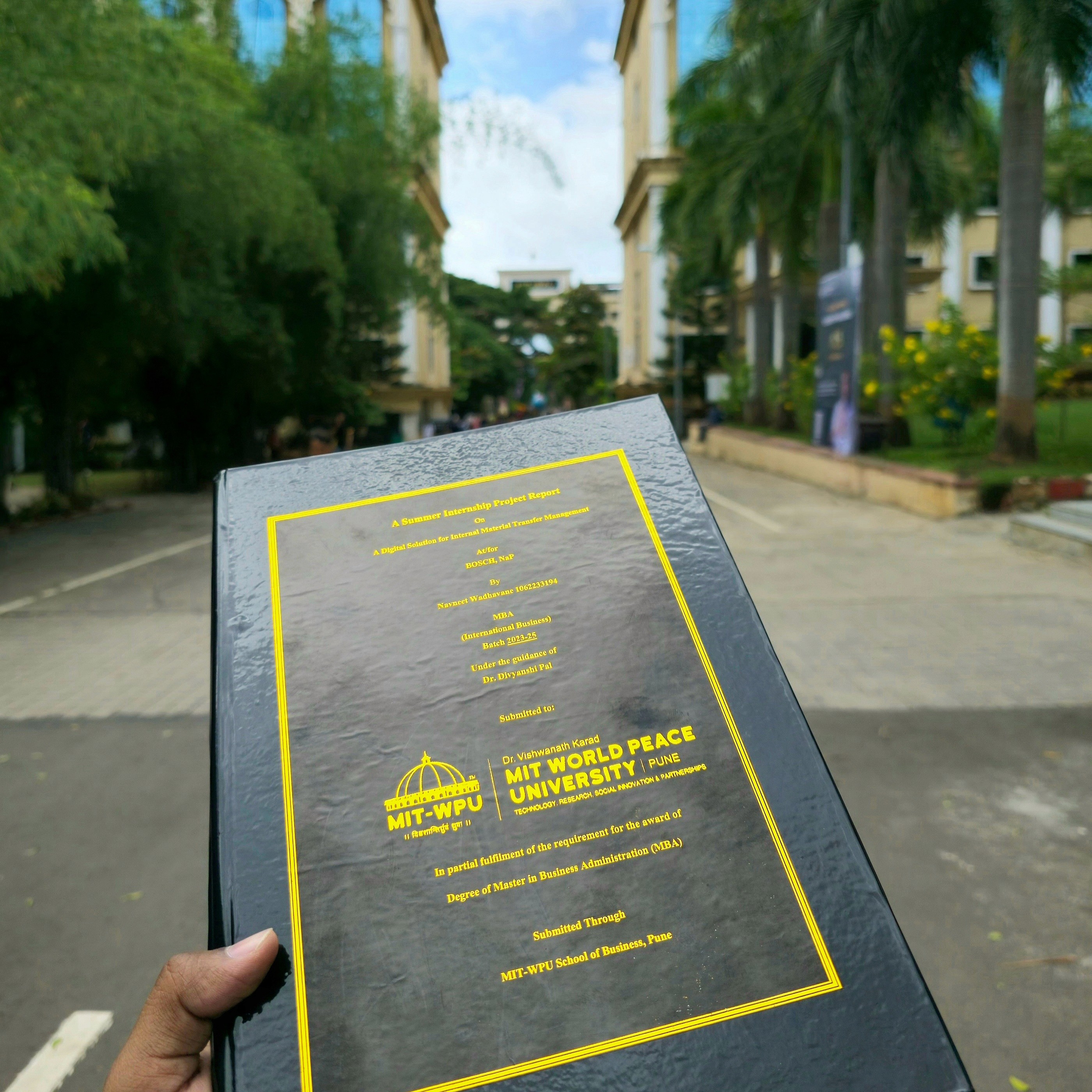
Navneet Wadhavane knows that on a high-volume manufacturing floor, every single second counts. During his tenure as a Project Trainee in Customer Logistics and Planning at Bosch Ltd. Nashik, he was tasked with auditing a critical automotive process: the internal 'milkrun.' By stepping directly onto the factory floor to inspect routes and monitor manual timesheets, Navneet didn't just observe logistical bottlenecks—he architected a complete digital transformation, designing the framework for the Material Transfer Management System (MTMS).
Identifying the Bottlenecks on the Factory Floor
To optimize a process, you first have to understand its flaws. The traditional milkrun relied heavily on manual data entry and timesheet monitoring, which made real-time KPI analysis almost impossible. By conducting thorough route inspections and time studies, Navneet identified precise inefficiencies—specifically unnecessary paths and delays during the loading and unloading stages. "You cannot fix what you cannot measure," Navneet notes. "To eliminate these delays and optimize inventory turnover, the entire tracking mechanism needed to be brought into the digital age."
Engineering a 'Simply Clever' Digital Solution
The answer was the MTMS—a fully integrated software architecture designed to replace paper trails with data-driven transparency. Navneet laid the groundwork for a system utilizing encrypted QR code scanning, real-time GPS tracking for trolleys, and automated algorithmic task assignments. By mapping out exactly how this technology integrates with logistics operations, he ensured that delivery statuses, delays, and accountable personnel could be monitored on a live digital dashboard, drastically reducing cycle times.
Bridging SAP, Inventory, and Infrastructure
A successful digital transformation never happens in isolation. Alongside the MTMS software requirements, Navneet explored advanced SAP use cases to visualize outbound logistics and assess packaging materials for CRI and CRIN components. This holistic approach ensured that the digital system was perfectly aligned with physical inventory management. Furthermore, these insights directly laid the groundwork for his subsequent work stream: forecasting and modeling the cost logistics for a larger dock station redevelopment project.
The Takeaway
For Navneet, the Bosch internship was the ultimate exercise in turning theory into practice. By successfully designing the digital framework to automate and secure the milkrun process, he proved his ability to lead cross-functional digital transformation—an essential skill for driving agility in the modern, global automotive supply chain.