Digitizing Internal Logistics: A Milkrun Tracking System (MTMS) Project for BOSCH
Digitizing Internal Logistics: A Milkrun Tracking System (MTMS) Project for BOSCH
DURATION
3 Months
DURATION
3 Months
FOR WHO?
BOSCH Nashik
FOR WHO?
BOSCH Nashik
Business Case Development & ROI Analysis
Business Case Development & ROI Analysis
Process Optimization & Material Flow Analysis
Process Optimization & Material Flow Analysis
KPI Performance Analytics & Reporting
KPI Performance Analytics & Reporting
PROJECT OVERVIEW
PROJECT OVERVIEW
This project's objective was the digital transformation of the internal material tracking system at the BOSCH Nashik Plant. The existing manual "Milkrun" process was replaced with a QR-code-based Material Transfer Management System (MTMS). This solution was designed to eliminate data inaccuracies and provide reliable KPI analysis. The project achieved a 95% data accuracy rate and a 10% gain in overall delivery efficiency.
This project's objective was the digital transformation of the internal material tracking system at the BOSCH Nashik Plant. The existing manual "Milkrun" process was replaced with a QR-code-based Material Transfer Management System (MTMS). This solution was designed to eliminate data inaccuracies and provide reliable KPI analysis. The project achieved a 95% data accuracy rate and a 10% gain in overall delivery efficiency.
The Challenge
The Challenge
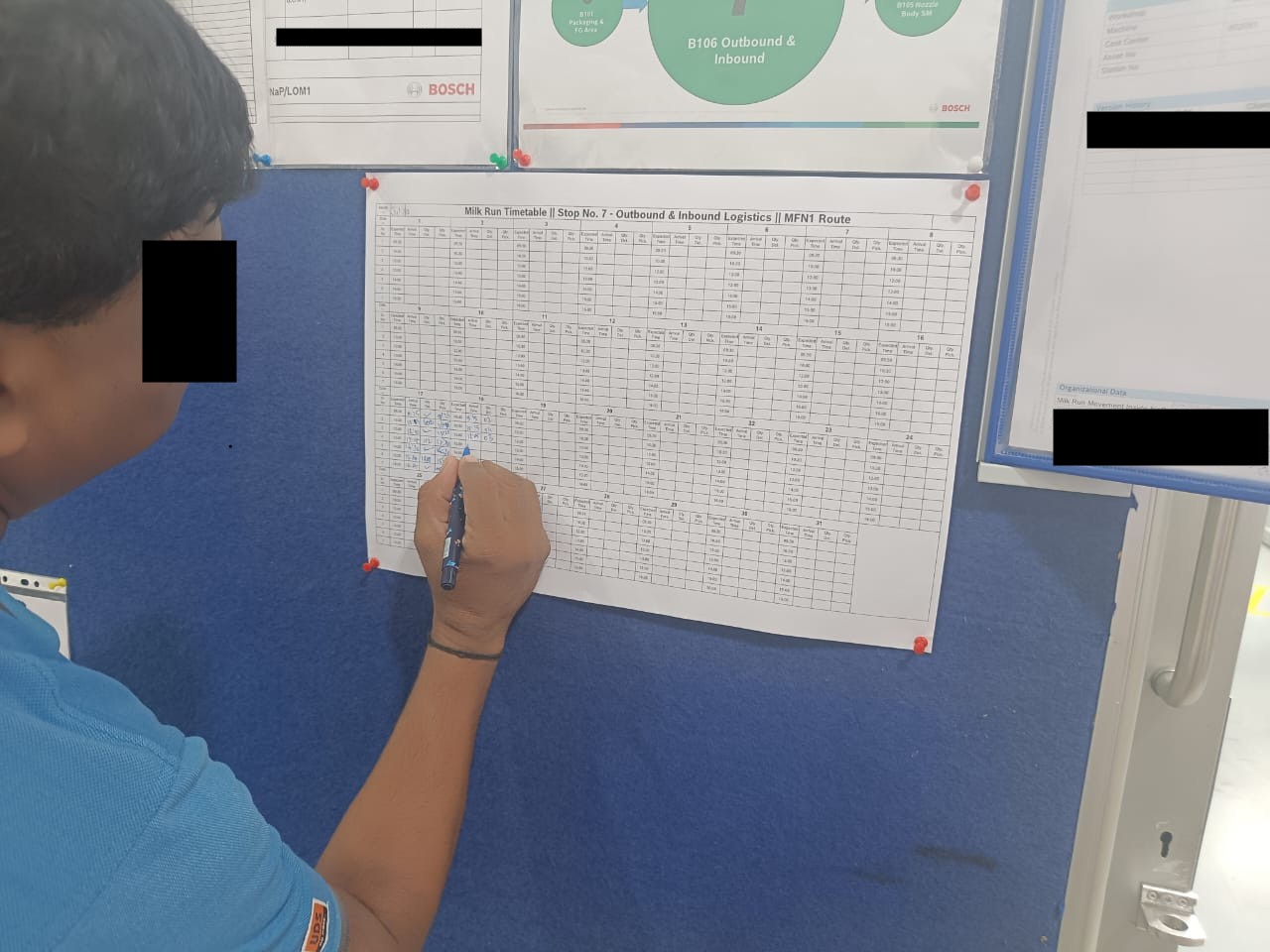
The primary challenge was the plant's reliance on an inefficient, manual tracking system for its internal "Milkrun" logistics. This method resulted in a critical lack of data accuracy, stemming from paper-based timetables and random audits. Consequently, reliable time adherence monitoring was impossible. This lack of visibility hindered operational efficiency and prevented effective process optimization and bottleneck analysis.
The primary challenge was the plant's reliance on an inefficient, manual tracking system for its internal "Milkrun" logistics. This method resulted in a critical lack of data accuracy, stemming from paper-based timetables and random audits. Consequently, reliable time adherence monitoring was impossible. This lack of visibility hindered operational efficiency and prevented effective process optimization and bottleneck analysis.

WHAT I DID
WHAT I DID
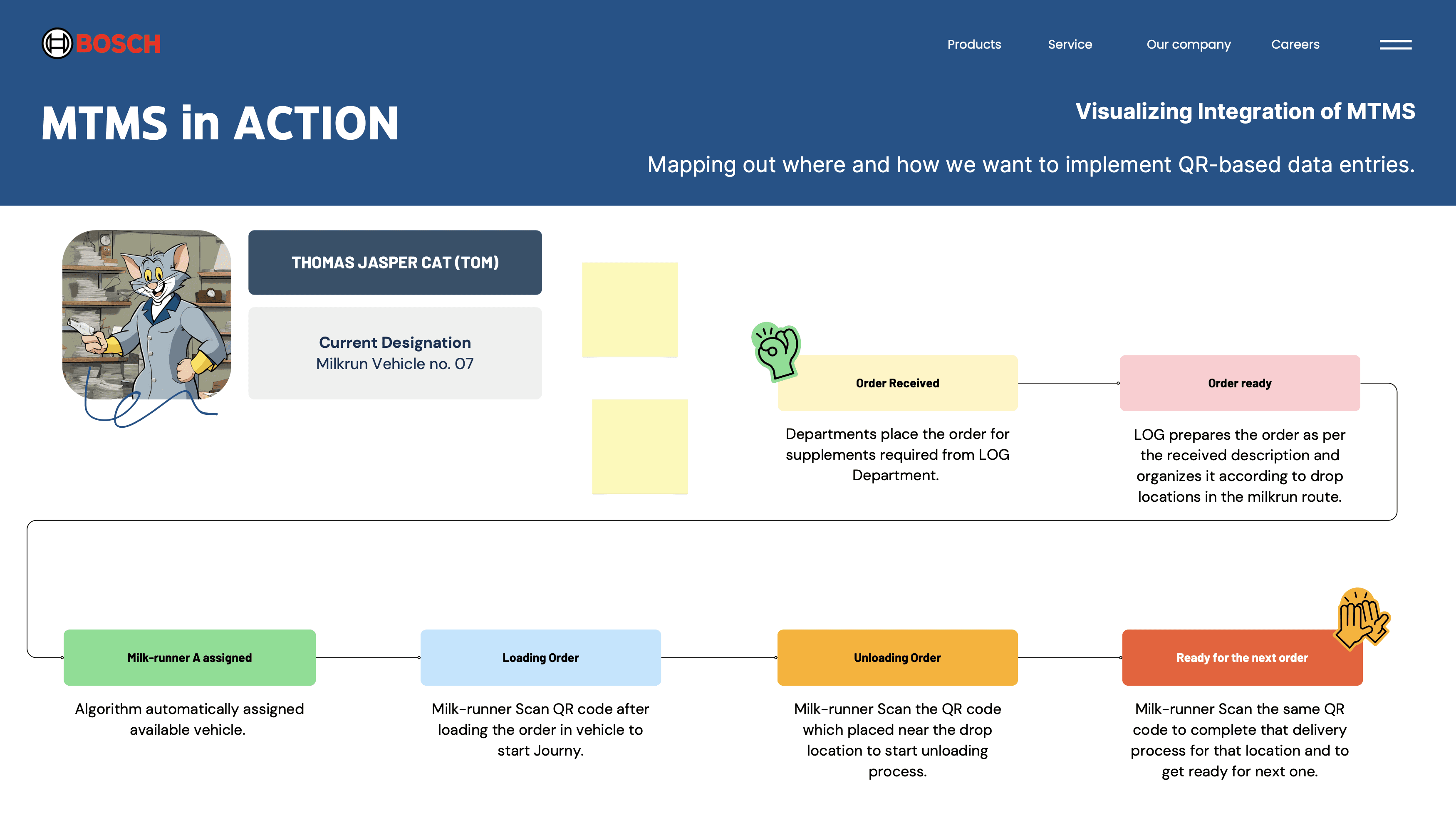
As the project trainee, I conducted a Material Flow Analysis (MIFA) and KPI analysis to quantify the manual system's inefficiencies and build the business case for a digital solution. I then led the conceptualization and design of the new Material Transfer Management System (MTMS). This system utilized QR-code scanning for real-time tracking and verification. The solution was supplemented by an RFID/route optimization plan and SAP material classification to improve physical efficiency.
As the project trainee, I conducted a Material Flow Analysis (MIFA) and KPI analysis to quantify the manual system's inefficiencies and build the business case for a digital solution. I then led the conceptualization and design of the new Material Transfer Management System (MTMS). This system utilized QR-code scanning for real-time tracking and verification. The solution was supplemented by an RFID/route optimization plan and SAP material classification to improve physical efficiency.


Quantified Results & Impact
The implementation of the MTMS solution led to significant, measurable improvements in operational performance:
95% Data Accuracy: Achieved by replacing manual log entries with a reliable digital QR system.
10% Delivery Efficiency Gain: Realized through the RFID and data-driven route optimization plan.
65-Minute Cycle Time Reduction: Identified and confirmed via the initial MIFA and process improvements.
75% Window Time Adherence: A stable, reliable process benchmark was established for the first time.
Quantified Results & Impact
The implementation of the MTMS solution led to significant, measurable improvements in operational performance:
95% Data Accuracy: Achieved by replacing manual log entries with a reliable digital QR system.
10% Delivery Efficiency Gain: Realized through the RFID and data-driven route optimization plan.
65-Minute Cycle Time Reduction: Identified and confirmed via the initial MIFA and process improvements.
75% Window Time Adherence: A stable, reliable process benchmark was established for the first time.
Jordan Holloway
Jordan Holloway
Co-Founder, Ember & Oak Brewing Co.
Co-Founder, Ember & Oak Brewing Co.